
'Catching the Eye' - technology makes possibilities

Stuart Neale • 26 July 2023


After having walked some distance on the journey of film and digital capture and dare I say photography, my eyes have indeed been ‘opened’ to some interesting concepts and realisations. 
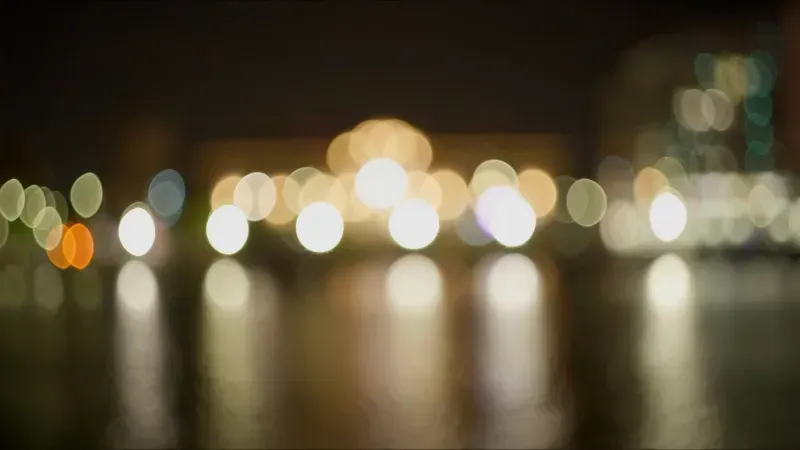

Take the subject of depth of field for example, which has for many decades opened up cinematic and photographic opportunities for creative visual representations of not only the real, natural world, but also an avalanche of ‘special effects’ specifically created for film, TV and many other consumer-led photographic industries. The digital ‘Iris’ known as 'aperture' has been the bread and butter of lens manufacturers for decades, allowing a myriad of focus permutations, together with rich variations of ‘bokeh’ for the capture of outstanding visual performances whether in the film studio or 'on location'.


But for the source of innovation and creation we can look no further than our very selves - the human form, which intrinsically provides a template for so many things, not least of which is the construction and operation of the human eye....


Let us consider for a moment the in-built capability of just one element of the exposure triangle, that being our ability to make split second changes to our focus length according to the myriad of light conditions; the amount of camera and lens configurations needed to emulate this vast expanse of permutations would be endless, together with the speed of set up coming absolutely nowhere close to our own, visual expertise.


Now where technology may have introduced additional, tangible layers of dimension to the ‘capture’ process is the emerging development of virtual digital techniques such as the planned virtual production laboratory scheduled for completion here in Belfast Harbour Studios - https://www.business-live.co.uk/technology/new-belfast-virtual-production-lab-27139470 - a new brand of explosive creativity that heralds even greater illusions of reality, and supernatural effects, I believe will attract many global operations including the Hollywood ‘set’ for many future productions; with Disney’s show “The Mandalorian’ already having been produced at this 'cutting edge' production facility, it certainly seems destined to ‘catch the eye’ of the consumer as the productions roll in and roll out…


Nevertheless, its worth sometimes to stop and stare and by using the very tool we were born with, that has indeed the most extravagant visual ability, together with that pandora’s box called ‘imagination’, we can emulate and even surpass the technical engineering constructed by human hands.


Yes we can be inspirationally motivated by our wonderful industry but not reliant on its' technology to ‘Catch the Eye’.
by Stuart Neale 6 June 2026
For years I believed colour grading to be all about ‘Contrast’, ‘Saturation’ and LUT’s. Then I realised I have been asking those controls to perform jobs that belong elsewhere in the imaging chain. The breakthrough arrived when I migrated my thinking from using ‘tools’ to the actual journey an image takes in the physical process of Negative, to Stock, to Print. A plethora of digital tools have, over these past few decades, been created and designed to emulate the original film production workflow with the digital revolution exploding within the film industry leaving no stone unturned, no production artefact spared from beginning to end. For one such as myself, a humble independent film maker and colourist, I have wholeheartedly embraced this digital extravagance in pursuit of that ‘holy grail’ - a true film-emulation. The editing and colour grading tools and functionalities within such digital platforms are vast, but, what of the original, physical process of capturing images onto a ‘film stock’, performing a photochemical balancing process and then a final print? My thinking has migrated back to considering the journey an image takes from negative, stock to print, and how my approach to the colour grading tools should follow and emulate this film process. Why do filmic Images emerge from relationship, not control?.. Let me give you an example from my own first-hand experience; a piano is not tuned successfully by making every interval mathematically perfect. Small compromises are essential so that the instrument resonates as a coherent whole. Likewise, a filmic image is not created by maximising contrast and saturation, or using and applying tools and their parameters in of themselves, it emerges when exposure, colour relationships, stock responses and print finishing, all work together creating a coherent whole that produces a natural resonance. The ‘magic’ lives in the interaction and the resonance is created through relationships. In the pursuit of true Film Emulation, I now want to understand how my colour grading tools should be sequenced and used, what should be their roles and responsibilities in the context of the film production process, making their interactions emulate that journey of the physical image.
by Stuart Neale 21 March 2024
I have been referred to along lifes journey as a ‘perfectionist’ and with some internal satisfaction I previously received this label with glee, but now I’m not so sure..
by Stuart Neale 28 October 2023
Both the music and film industries have primarily been established over many decades, being driven through the hunger of the consumer to be entertained. Of course nothing wrong in that (I hear you say), but when in the case of purely commercially released music and film production being used very effectively as ‘containers’ to deliver a variety of messages, which are not derived from genuinely altruistic but self serving motives, I begin to wonder is this really 'Art'?
More posts